


Let’s start with a bitter truth: most people waste nearly half the aroma and color of the saffron they buy simply because they brew it incorrectly. Saffron is the world’s most expensive spice, but did you know that pouring boiling water directly over it can cause a significant amount of its volatile aromatic compounds—the very compounds responsible for its distinctive fragrance—to evaporate?
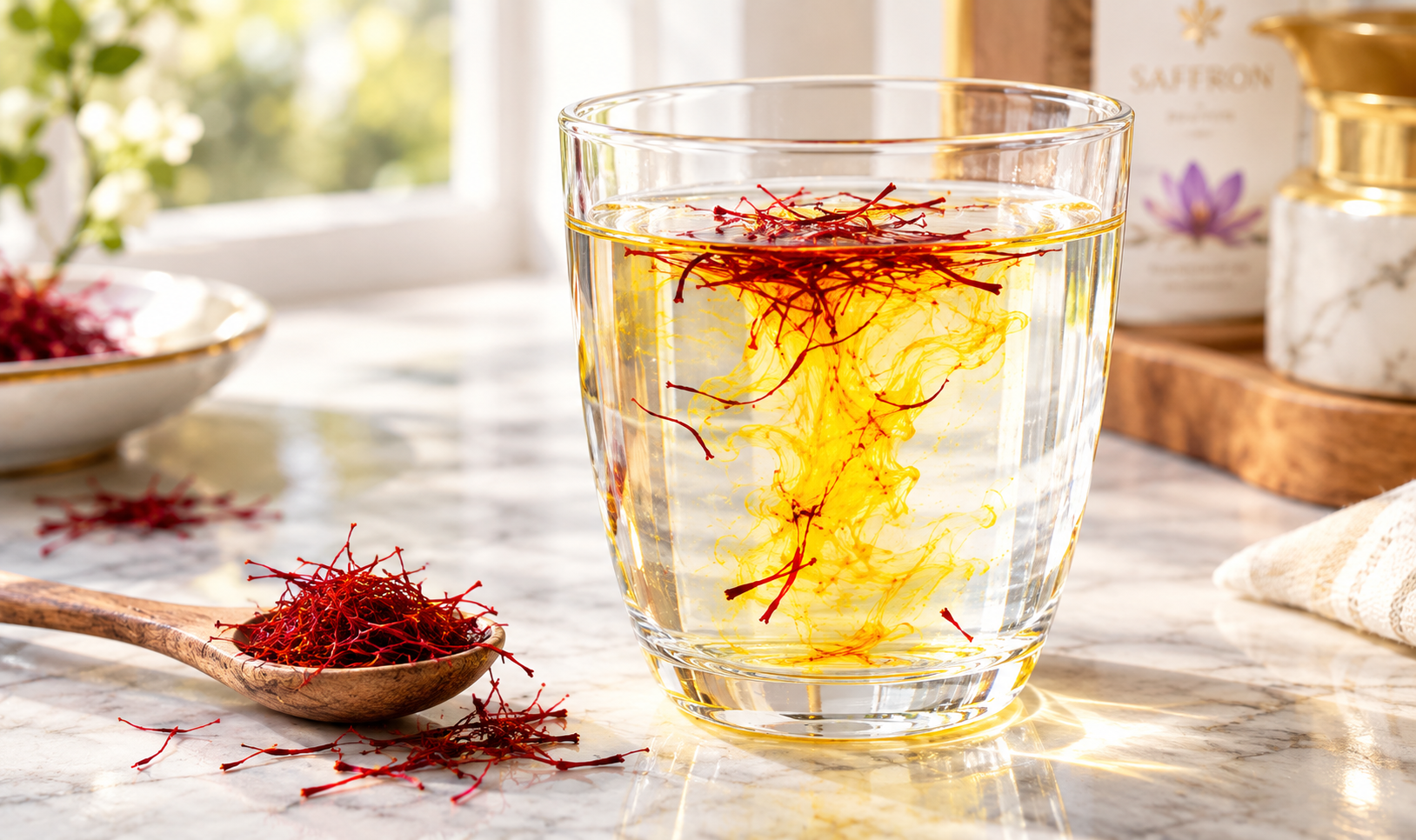
In this guide, we challenge traditional brewing methods and show you how to use the “Thermal Shock Method” to maximize the extraction of saffron’s color compounds (crocin) and aroma (safranal), allowing you to get the most out of this precious red gold.
Before adding water or ice, you need to break down the cellular structure of the saffron. But what is the right way to do it?
Warning: If you live in a humid environment, such as northern Iran, place the saffron over very low heat for a few seconds before grinding—for example, above a heater or in a microwave for approximately 5 seconds—to make it completely crisp.
This is the traditional method, but 90% of people get it wrong. They pour boiling water at 100°C directly over the saffron and then place it on the kettle to simmer. This can cause much of the saffron’s delicate aroma to dissipate.
Brewing saffron with ice, also known as cold extraction, is an effective method for extracting saffron’s primary color compound, crocin. As the ice melts slowly, it allows the saffron to gradually release its pigments, producing a highly concentrated color.
If you want the rich aroma of the hot-water method combined with the intense color of the cold method, this technique is for you. This approach is often used in professional kitchens when preparing saffron for rice dishes and garnishes.
| Factor | Hot Water | Ice | Thermal Shock (Combined) |
|---|---|---|---|
| Aroma | Excellent | Moderate | Exceptional |
| Color Extraction | Moderate | Very High | Maximum |
| Time Required | 10 minutes | 1–2 hours | 15 minutes |
| Color Clarity | Slightly Cloudy | Very Clear & Vibrant | Very Clear |
Comprehensive Saffron Buying Guide: Which Grade and Type Offer the Best Prof and Efficiency? The
How to Distinguish Real Saffron from Fake at Home: A Practical Guide for Retail
Comprehensive Guide to Wholesale Saffron Purchasing for Exporters and Businesses: Key Criteria, Standards, and Analysis
Fill out the form and our team will get back to you within 24 hours.
No account yet?
Create an AccountFill out the form and our team will get back to you within 24 hours.

