


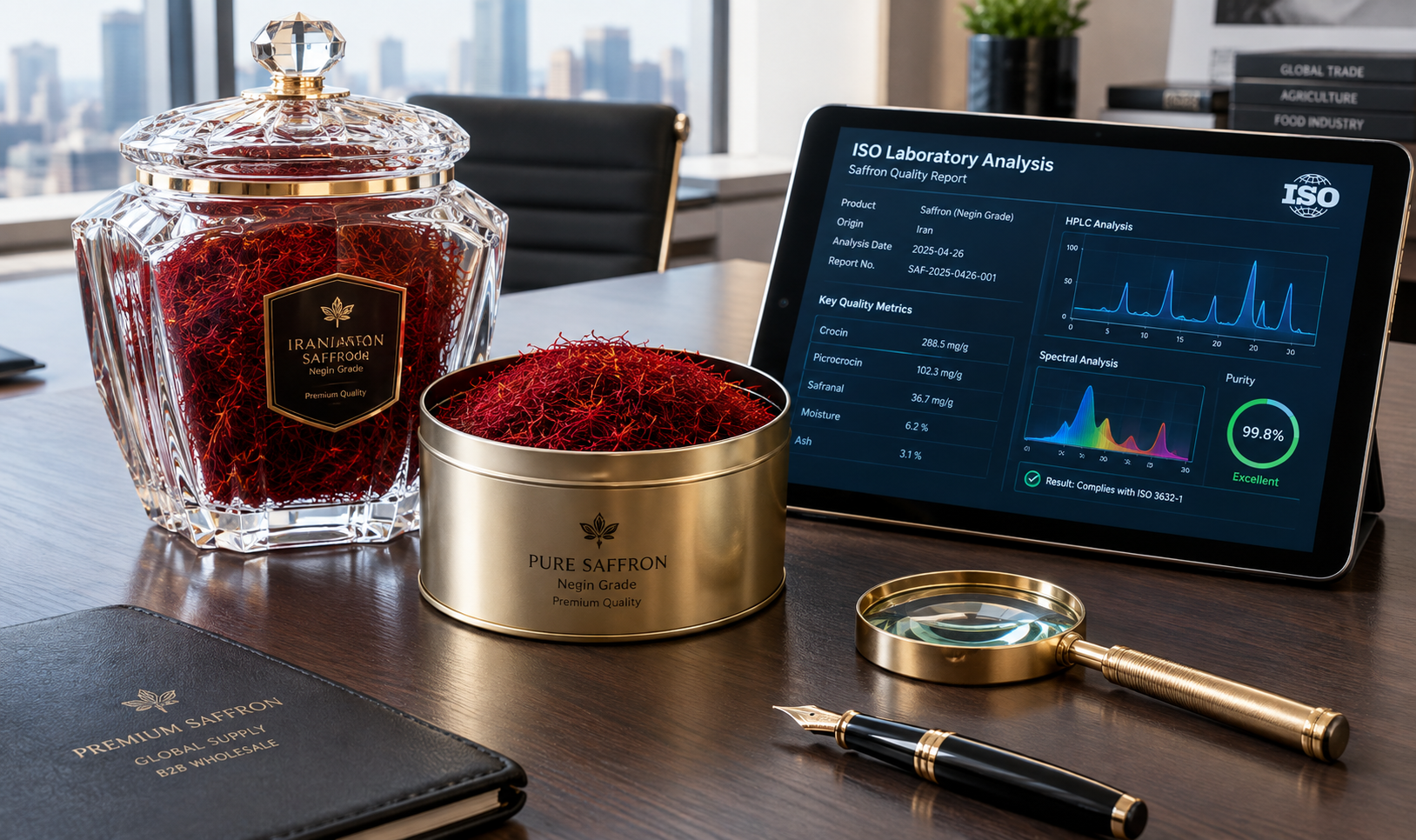
The global saffron market is no longer governed by traditional trust and street-level haggling. Today, when sourcing wholesale saffron for export, food processing plants, or chain hotels, the universal language is the ISO 3632 international standard and certified laboratory analysis reports.
For exporters, distribution companies, or industrial procurement managers investing capital in saffron, mastering these technical factors and quality metrics dictates the boundary between a profitable venture and a costly failure. This comprehensive guide outlines everything required for intelligent, risk-free wholesale procurement.
Retail buyers typically seek pleasant aromas for household use or elegant gram-scale packaging. In wholesale quantities (ranging from kilograms to metric tons), decision-making variables shift significantly:
Batch-to-Batch Quality Consistency: Saffron is an agricultural commodity influenced by seasonal weather variations. A reliable wholesale supplier must deliver consistent coloring strength year-round.
Legal and Customs Documentation: Health certificates, phytosanitary certificates, certificates of origin, and valid laboratory analysis reports are mandatory for clearing international customs.
Cut Type and Shelf Life: Selecting the precise cut type (Negin, Sargol, Pushal) must align with target export markets (e.g., Middle Eastern, European, or East Asian preferences).
No professional buyer procures wholesale saffron without reviewing an authorized laboratory analysis report. The ISO 3632 global standard evaluates three primary chemical factors to measure saffron purity and potency:
Crocin (Coloring Strength): Responsible for saffron’s rich golden hue. ISO 3632 defines minimum light absorption thresholds. Premium export-grade saffron exceeds these minimums, allowing end-users to achieve desired coloring with smaller quantities.
Safranal (Aroma and Fragrance): Generates saffron’s signature intoxicating scent. Improper storage or aging directly degrades safranal levels.
Picrocrocin (Flavor and Bitterness): Drives saffron’s pleasant, subtle bitterness. Sweetness or a lack of standard bitterness indicates adulteration or impurity.
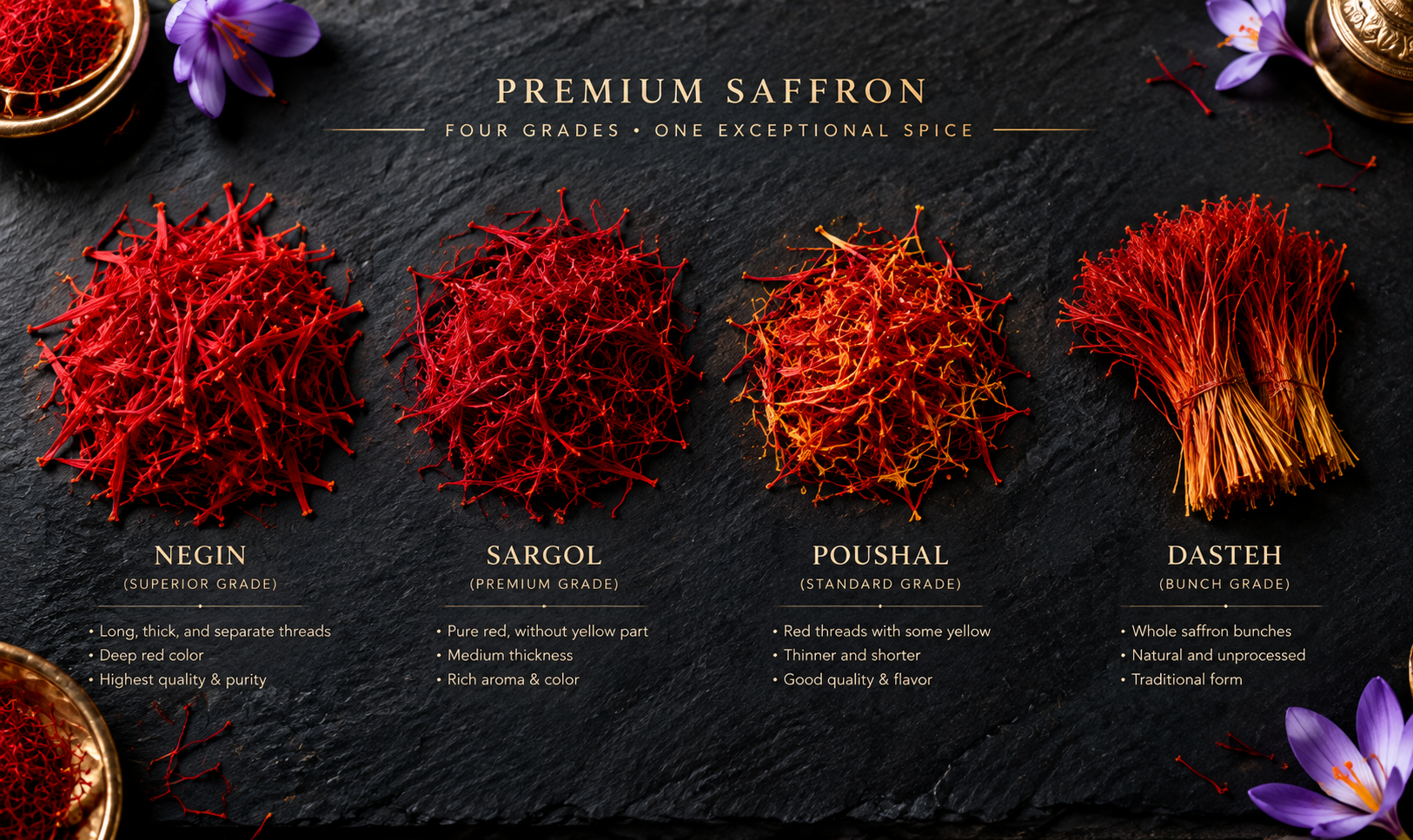
Understanding distinct cut types ensures you acquire products tailored precisely to client requirements:
Negin Saffron: The most luxurious and expensive wholesale grade. Stigmas are exceptionally thick, straight, free of yellow style roots, and possess maximum crocin content. Ideal for export to European markets and the Persian Gulf region.
Sargol Saffron: Completely red, separated stigmas, though typically shorter and finer than Negin. Features outstanding coloring strength and commands high demand in both domestic and international markets.
Pushal Saffron: Features red stigmas attached to 2 to 3 millimeters of yellow style (root). Because of the root attachment, it commands a lower price point while remaining popular among select food industries and herbal shops due to its high authenticity assurance.
Weight and Moisture Adulteration: Properly dried saffron must maintain a standard moisture level below 10%. Unscrupulous vendors artificially inflate weight via excessive moisture, which causes mold during storage.
Cut Blending: Unsupervised bulk wholesale purchases often contain mixtures of premium saffron and inferior Pushal grades.
Prevention Strategy: Exclusively source from operations offering pre-purchase sample testing and verified official laboratory analysis reports.
Wholesale Ordering and Price Inquiry Guide
For exporters, wholesale distributors, or industrial production lines seeking sustainable supplies of authentic saffron accompanied by official analysis sheets and competitive pricing, our B2B sales specialists provide specialized consultation and daily rate quotes tailored to specific tonnages and cut types.
Wholesale Sourcing Clinic: Contact our commercial department or complete the price inquiry form on our website to receive our specialized wholesale product catalog and arrange sample delivery.
Comprehensive Saffron Buying Guide: Which Grade and Type Offer the Best Prof and Efficiency? The
How to Distinguish Real Saffron from Fake at Home: A Practical Guide for Retail
Let’s start with a bitter truth: most people waste nearly half the aroma and color
Fill out the form and our team will get back to you within 24 hours.
No account yet?
Create an AccountFill out the form and our team will get back to you within 24 hours.

