


When buying saffron, nobody wants to throw their money away. Saffron is one of the world’s most precious spices, and unfortunately, this high value has tempted fraudsters to devise various methods of adulteration—from dyeing corn stigmas and other plant roots with artificial colors to adding weight with moisture or sugar.
If you purchase saffron in small quantities (grams or mesghals) for home use, you have likely asked yourself: “How can we tell if the saffron we bought is genuinely authentic?”
This guide skips the complex chemistry lab tests, offering 4 incredibly simple yet scientific home tests that expose fake saffron within minutes.
Fake saffron lacks a pleasant aroma and flavor. Worse yet, unauthorized chemical dyes or industrial food colorings pose severe health risks, such as acute allergies or digestive disorders. Furthermore, saffron lacking sufficient aroma and crocin ruins cooking performance and color yield entirely.
Test 1: Speed and Quality of Coloring in Cold Water (The Gold Standard)
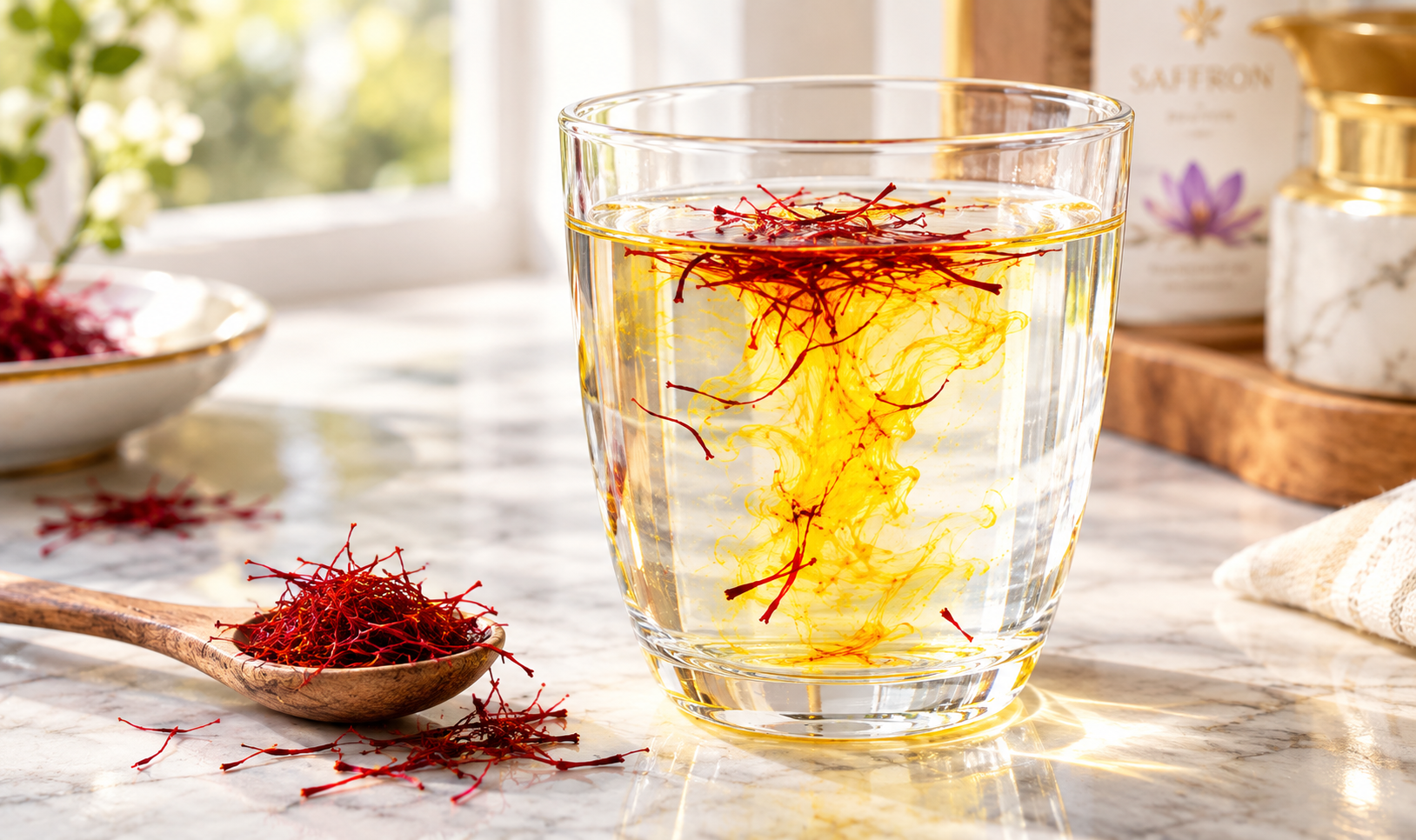
Genuine saffron features slow yet deep coloration due to its crocin content.
Test Method:** Drop a few saffron threads into a glass of cold water.
Real Saffron Result: The water slowly turns a golden-yellow or mild orange over several minutes. The saffron stigma largely retains its original red color even after releasing color and does not turn white.
Fake Saffron Result: If the water immediately turns deep red, magenta, or purple, and the stigma turns white, it is undoubtedly a dyed imitation (typically corn silk or other plants with artificial coloring).
Test 2: The Taste Test (Real Saffron is Bitter, Not Sweet!)
Test Method: Place a single thread of saffron on your tongue and suck on it slightly.
Real Saffron Result: Authentic saffron tastes bitter with a pleasant, distinct aftertaste.
Fake Saffron Result:** If it tastes sweet, fraudsters have coated it with sugar syrup, honey, or fats to increase its weight. Avoid consumption immediately.
Test 3: Stigma Appearance (Trumpet Shape and Imperfection)
Nature is never uniformly identical, and true saffron stigmas follow a distinct anatomy.
Test Method / Observation: Examine the shape of the threads closely.
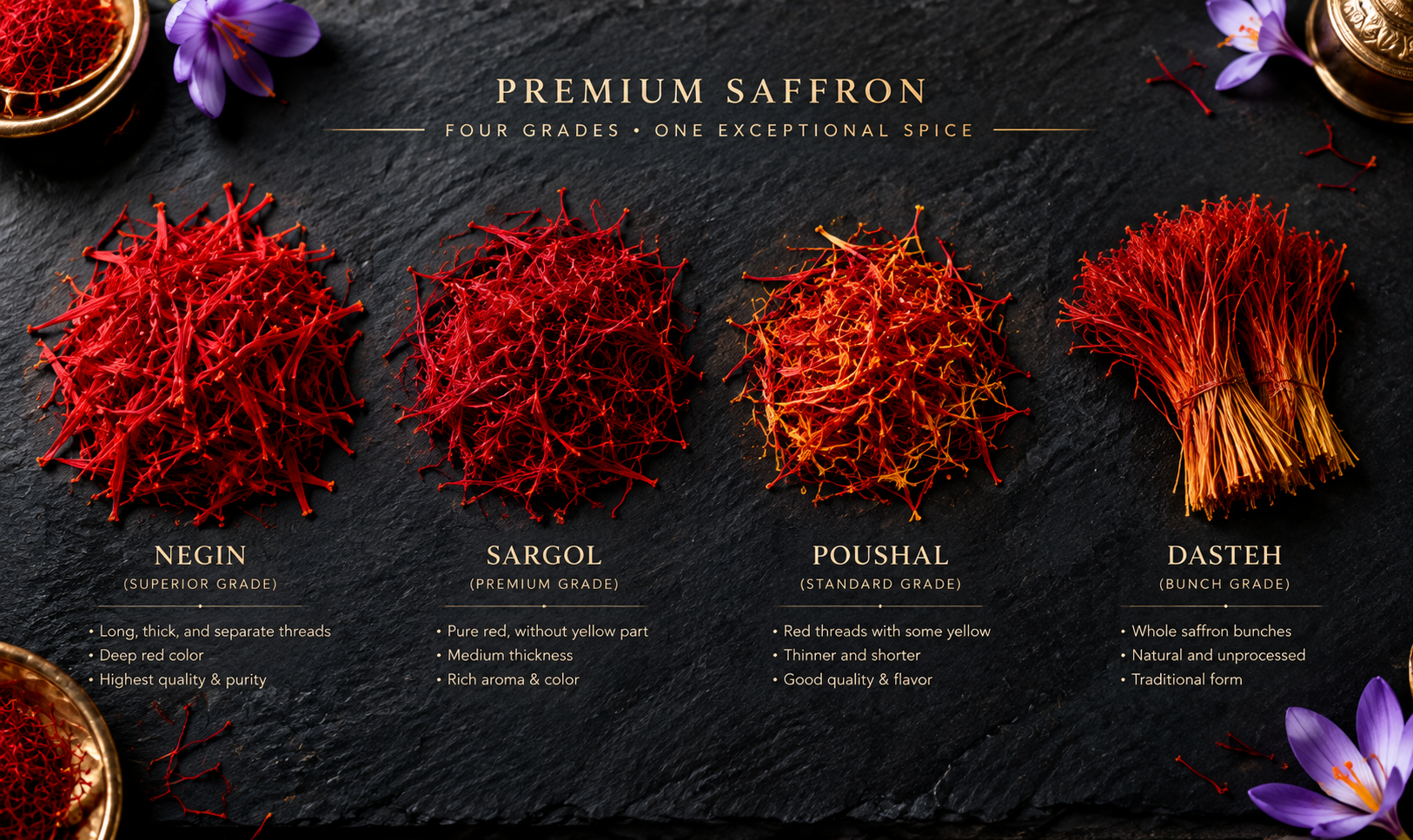
Real Saffron Result: The base of the stigma (where it connected to the style) is typically wider, trumpet-shaped, and features delicate splits. The threads are never completely uniform or perfectly symmetrical.
Fake Saffron Result: Stigmas that are entirely uniform, perfectly straight, tightly rolled, or identical are usually manufactured by machines or built from synthetic fibers.
Test 4: The White Paper Test (Residue Check)
Test Method: Place a few saffron threads between a piece of white paper and press or rub them firmly.
Real Saffron Result: Genuine saffron leaves no trace of oil or heavy moisture on the paper (slight natural crushing is normal).
Fake Saffron Result: If the paper becomes greasy or oily, the saffron has been artificially weighed down with oils or fats.
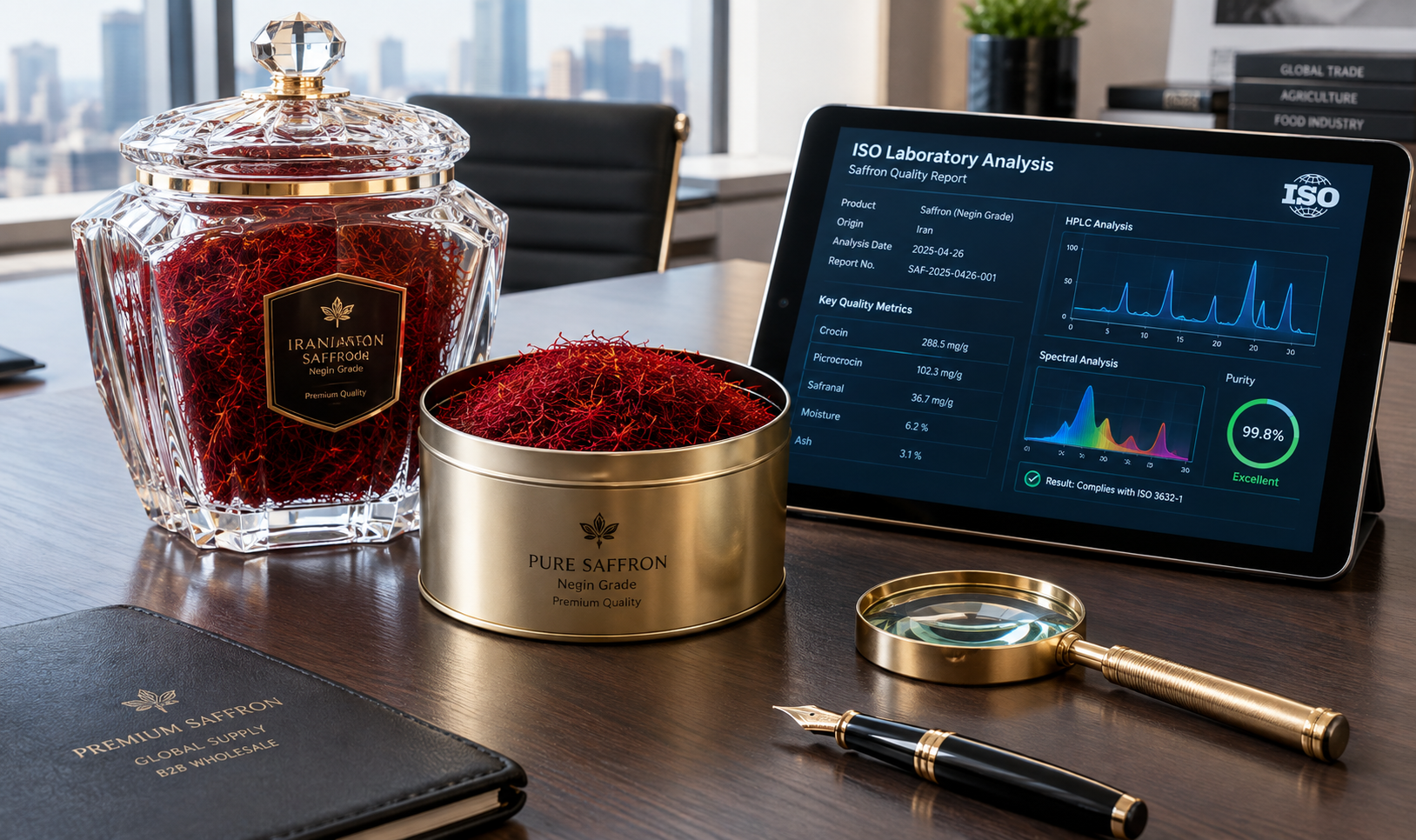
While these tests help catch flagrant counterfeits, the most reliable approach for retail purchases (such as Khatam, crystal, or envelope packaging) is buying from brands that guarantee product authenticity, provide laboratory analysis sheets, and offer money-back guarantees.
[Store Special Recommendation]: All our retail products are supplied with a 100% authenticity guarantee, exceptional aroma, and quality control certificates. Visit our store page to explore gram and mesghal packaging options and claim your first-order discount.
Comprehensive Saffron Buying Guide: Which Grade and Type Offer the Best Prof and Efficiency? The
Comprehensive Guide to Wholesale Saffron Purchasing for Exporters and Businesses: Key Criteria, Standards, and Analysis
Let’s start with a bitter truth: most people waste nearly half the aroma and color
Fill out the form and our team will get back to you within 24 hours.
No account yet?
Create an AccountFill out the form and our team will get back to you within 24 hours.

